Travel & Life
What My Ph.D. Couldn’t Teach Me
A scientist trained to chase breakthroughs discovers progress in the smallest moments. Dr. Nidhi Paliwal’s journey through motherhood and neurodiversity redefines what success really means.
The greatest discoveries are not always made in laboratories. Sometimes they are made in love, acceptance, and the unwavering belief that every child deserves to be understood.
I spent years believing that the most meaningful discoveries happened inside research laboratories. Life eventually taught me otherwise.
There are places that educate you, and then there are places that transform you. For me, IIT Delhi and IIT Bombay did both. Years of hypotheses, simulations, experiments, failed trials, late-night laboratory sessions and publications taught me that research is not merely about finding answers—it is about asking better questions, embracing uncertainty and persevering through failure.
The Laboratory That Built Me
IIT Bombay became much more than a campus—it became home. Countless nights in the laboratory, endless troubleshooting, discussions over cups of tea and quiet evening walks around Powai Lake shaped not only the researcher I became but also the person I would one day need to be. My Ph.D. journey taught me resilience, patience, critical thinking and curiosity—qualities I believed would define my scientific career.
The Day My Research Changed Forever
After my doctorate, I continued working at IIT Bombay as a Project Scientist. I believed I understood what success looked like. Then life gently introduced me to an entirely different definition.
The most meaningful questions I would ever learn to ask came through my son, Shubh.
When he was diagnosed with neurodevelopmental challenges, the future I had carefully planned disappeared overnight. Conferences, publications and career milestones suddenly became secondary. Every question became about understanding my child and helping him thrive.
At one of my lowest moments, my Ph.D. supervisor told me: “Nidhi, you’ve been a fantastic researcher. Now it’s time to become an extremely fantastic mother. I am not sure how fortunate you are, but I know your son is very fortunate to have you as his mother.” Those words transformed the way I saw both motherhood and research.
A Different Kind of Research/My New Laboratory
The researcher in me never disappeared—it simply found a new laboratory.
I approached Shubh’s development with the same scientific curiosity that once guided my research. Instead of lasers and optical fibres, I studied behaviour. Instead of experimental data, I observed tiny developmental changes. Therapy sessions became my fieldwork. Scientific papers on child development became my new literature review. Therapists and fellow parents became collaborators in a shared mission. My scientific training had taught me to observe closely, ask better questions, look for patterns and persevere when results were not immediate. With Shubh, those same skills took on a different meaning: I had to keep observing, questioning and adapting while respecting that his developmental path would be uniquely his own.
Scientific experiments are expected to be reproducible. Children are not. In research, I learned to observe, question, repeat, refine and persevere until I understood what was happening. With Shubh, I learned that progress cannot be approached with the expectation that the same method will produce the same result every time. Each child follows a unique path, and what works today may need to be adapted tomorrow. My scientific training taught me how to keep searching; motherhood taught me to respect the uniqueness of the journey.
Today, my laboratory consists of therapy rooms, classrooms, hospitals and our home. I have learned to find meaning in the smallest moments with Shubh—a smile, a new word, a moment of meaningful communication, a little more emotional regulation, or one small step towards independence. These moments may seem ordinary to someone else, but for me, they can carry a significance that no graph or publication ever could. Each one reminds me that progress does not always arrive as a dramatic breakthrough; sometimes, it quietly appears in a moment that only a parent who has been watching, waiting and persevering can fully appreciate.
Redefining Success
Somewhere along this journey, I realised that my definition of success had quietly changed. The milestones I celebrate today are not publications or awards. They are meaningful communication, emotional regulation, growing independence and the confidence with which my son explores the world.
My Ph.D. prepared me to ask questions. Motherhood taught me why those questions mattered. The researcher in me gave the mother in me the courage to keep searching for the right direction to help my son discover his fullest potential. The mother in me gave the researcher a purpose far greater than I had ever imagined.
Through the optics of neurodiversity, I learned to shift my lens from deficits to strengths, and to see abilities where the world often sees labels. Every child deserves understanding before judgment, acceptance before correction and opportunities before assumptions.
My journey has taught me that progress does not always look the way we expect it to. Sometimes it is visible in a milestone; sometimes it is hidden in a small change that only a parent or therapist notices. What matters is learning to recognise and value that progress.
Success is not measured only by certificates, promotions or awards. For me, it is measured by the therapy sessions I kept showing up for, the difficult decisions I made with courage, the setbacks I faced, the tiny milestones I celebrated, and the moments I chose unconditional love and unwavering faith in Shubh.
My most profound research extends far beyond scientific journals; it unfolds every day through my son, whose journey continues to teach me the true meaning of perseverance, possibility, and the extraordinary power of human potential.
About the author
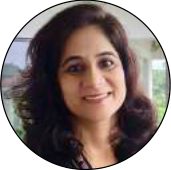
Dr. Nidhi Paliwal is a researcher with a Ph.D. in Electrical Engineering from IIT Bombay and an M.Tech. in Applied Optics from IIT Delhi. Her research spans optics, photonics, optical communications, and fiber-optic sensors, with publications in reputed scientific journals. Beyond her scientific pursuits, motherhood has shaped her understanding of neurodiversity, resilience, and acceptance. Her journey with her son, Shubh, has taught her to look beyond limitations and celebrate individual strengths, unique ways of learning and communicating, and small yet meaningful milestones. Through her writing, she strives to reshape perceptions of neurodiversity, empower families to embrace differences, and foster a world where every child is valued for their individuality, potential, and unique way of experiencing life.
Join the conversation
Comments are moderated and may take a little while to appear. Please keep the discussion respectful and on topic.
Comments open soon.