Business
More Than Headcount
One job can change generations; losing one can uproot a family. Vinay Malhotra reflects on the human stakes behind hiring, growth and layoffs.
“Lets welcome Alex to the company who has his day 1 today…”
“Team, for the recently won Liberty contract, we need to hire 14 welders and 12 e-techs…”
Over three decades of running businesses, I have celebrated many numbers: revenue, margins, contract wins, productivity and market share.
But one number has always given me a different kind of satisfaction.
Headcount.
Not because a bigger organization is automatically a better one, but because every new position represents something beyond the business itself. Somewhere, a young person has received an opportunity. Somewhere, a household has gained another source of economic security. Sometimes, that first job changes the trajectory of an entire family.
“Congratulations Barbara for a well-deserved promotion to senior sourcing specialist…”
We spend a great deal of time celebrating the people who invent the next technology, build the next great product or structure the next major transaction. We should. But after 30 years of carrying P&L responsibility, I have come to admire another kind of builder as well: the person who creates an enterprise capable of employing, developing and creating economic mobility for hundreds of other people.
I first understood what that meant in 2003.
From Five People to Three Hundred
I was a young business line manager for a division of Schlumberger in India. When I took over, it was a roughly $1 million-a-year business, and I was its fifth employee. I realized that there is no fun in running business this small. What is the use of being a business manager when there is not a substantial business to run. I decided to dedicate 90% of my time to business development. I gave presentations on technology usage to increase efficiency, and I used case studies from across the globe to get the buy in of the decision makers in the customer organization. Within a year, the efforts started to show results. We won new contracts, entered new areas of work, and the business began to grow.
By 2007, we were doing close to $100 million in annual revenue and had a team of roughly 300 people.
The revenue growth was exciting. The contract wins were exciting.
But what I remember most clearly is the hiring.
We recruited across India from IITs and engineering colleges, but also from smaller technical institutes. We hired in Delhi and Chennai, and in places such as Jalandhar and Kakinada. Many of the people joining us came from middle- and lower-middle-income families and were entering a demanding industry that could give them opportunities they had not previously imagined.
I specifically remember this young kid who came from a very poor daily wage laborer family in Agra. But somehow the parents had the vision of not pulling him as a labor too and saved enough to put him into a Diploma college. It was during the early days of our expansion, and I happened to interview him personally. He could not speak any English at that time and hence we switched to Hindi. He had never travelled out of Agra. He had borrowed money to come to Mumbai for the interview as workshop technician. This was his first train journey, first time in Mumbai and first time to see the Ocean. The gleam in his eyes when he was describing the bus journey from Dadar station to Navi Mumbai to come to our office for the interview, and particularly when the bus crossed the Vashi bridge and he got his first glimpse of the ocean was just incredible. He was the eldest of the 4 siblings, and he was determined to ensure that his younger siblings would also attend college. That determination, that innocent excitement, touched me in so many ways. He was technically not as strong as some of the kids coming in from bigger cities, but I decided to give him a shot. He was the fastest learner in that group of trainees. Schlumberger also sponsored his English classes so that he could attend the training schools overseas. I have kept in touch both with his professional success and his personal story. That one decision to hire him that afternoon has turned the trajectory of all 6 members of that family. All his younger siblings have attended college and working in different parts of India. He got an opportunity to work in various countries in the middle east along his career and his oldest kid is now attending a college in the UK. One decision – one employment – impact on multiple families and multiple generations. That is the power and satisfaction in creating businesses and employing 100’s and 1000’s of people.
That experience changed the way I thought about growth.
A business leader sees an additional employee as a line in a manpower plan or a cost in a budget. But behind that line is a person and often several other people whose lives are connected to theirs.
Suddenly, “growing the business” meant something much more tangible.
What IIT Taught Me and What My Career Added
In some ways, my own path toward business leadership had started years earlier at H5 in IIT Bombay.
By the middle of my second semester, I had realized that I was probably not wired for the deeply technical path many of my classmates seemed destined for. Getting into IIT was one thing. Keeping pace with 350 extraordinarily smart people was another.
So I found myself spending more time learning outside the classroom.
Whether it was lifting tables or bringing in sponsorships for Mood Indigo, participating in Malhar, working on PAF, or getting involved in institute elections, I discovered that I enjoyed bringing people together, solving practical problems and making things happen.
One final-year interview captured this rather efficiently.
Telco was recruiting for both technical and management positions. Within ten minutes, the panel suggested that I consider the management role.
I insisted that I wanted to try the technical track.
They gave me another mechanical engineering question.
A minute later, after watching me struggle, the panel leader finally said, “Mr Malhotra, why don’t you understand? We really think you will do better in the management role.”
He was probably right. A few months later, Schlumberger came to campus. They had rarely recruited a six-pointer, but the company was growing globally and somehow I managed to sneak in. I spent my first three years learning the basics as a field engineer before moving onto the management path. Then, for the first time, I was given responsibility for a P&L.
The cost lines kept me awake. A new contract win gave me a thrill. I was constantly searching for the next process improvement, the next lean idea, the next technology investment and the next business decision that could improve performance.
But what my career gradually taught me was that business creates value in more than one way. At IIT, we naturally admired technical brilliance: the person who could solve the hardest problem, invent something new or push the boundaries of science and engineering.
Over time, I came to admire another form of creation building an organization that could take an idea or capability, bring it to market, sustain it economically and create opportunities for hundreds of other people along the way.
The Human Side of a P&L
Over a 30-year career with Schlumberger, I have lived and worked in 12 countries and spent much of that time in P&L roles. Business environments changed. Cultures changed. Markets rose and fell.
The human side of running a business remained surprisingly consistent.
You see it when employees bring their families to a company picnic. You watch people get promoted, marry, have children and build careers. A headcount figure that once appeared on a spreadsheet gradually becomes a community of people whose lives are connected to the health of the organization.
That is when employment creation stops feeling like an economic statistic. It becomes personal.
And that is also what makes leadership difficult.
Businesses do not grow in straight lines. Markets turn. Contracts disappear. Costs become unsustainable. Sometimes the same leader who proudly approved new positions must make the painful decision to eliminate them.
I had to go through restructuring exercise few times. It is one of the most difficult decisions I have taken as a manager. You must emotionally prepare yourself. There is always a whole family which gets impacted, people get uprooted, kids need to change schools, spouses need to relocate. My philosophy has been to do it the way you would like it when your time comes. That one guiding principle has kept me humbled and grounded. Keep it as human as possible. I always make sure that I go and spend time with the individual and do a proper exit interview. No one on my watch has been let go of an email or a phone call. The manager must spend time with the individual to explain the decision and give the larger context. And every possible help should be extended, whether it is a severance package, a strong recommendation letter, mark the person re-hirable to keep the door open for when the business turns, access to company’s network, professional guidance to help the employee manage the transition. Do everything in your power to support the transition and most of the times these are no-or-low-cost actions, and you create an alumnus who will speak well of your brand for years to come. Lastly, there must be a goodbye meal to thank the person for his contributions and family should be invited. These are difficult moments, and humility goes a long way.
I recently took over as the CEO of a Private equity-based manufacturing company. Re-structuring and the EBITDA improvement are the key reasons PE went brought me in as the new CEO. While I have the complete backing of the board to go through the re-structuring, I am using every lesson learnt during my time in the larger corporation. I am keeping it human because I know there is a family you are impacting on, and I am making sure that I am doing everything possible in my personal and professional capacity to get the person re-employed asap. And when I successfully turn around the company, and ready for growth again, I will ensure that HR brings me a mix of people who were let go and still looking for good roles and the next bright young college kid who is raring to go.
For me, those moments reinforced an uncomfortable truth: creating employment is a privilege precisely because employment matters so deeply to the people receiving it.
It should therefore never be treated casually either when a job is created or when one has to be taken away.
A Different Measure of Impact
A young graduate getting their first job rarely makes a newspaper headline.
But that moment can change far more than one résumé. A stable salary can allow someone to support ageing parents, educate a sibling, buy a home, build savings or give the next generation opportunities that were not available to them.
The role may be that of an engineer, machinist, welder, technician, accountant, salesperson or manager. Some jobs receive more prestige than others. Their economic significance to the person receiving them can be equally profound.
This is particularly visible in developing economies, where one formal job can support an extended family. Perhaps this is one reason I have increasingly come to think about business leadership differently. We traditionally measure successful businesses through revenue, profit, valuation, market share and return on capital.
All of those measures matter.
But perhaps there is another question worth asking of people who spend their careers building companies:
How many people were able to build better lives because the institution you helped create existed?
That is not a substitute for financial performance. Without a healthy, profitable and competitive business, employment itself cannot be sustained.
In fact, that is precisely the point.
The entrepreneur who turns an idea into an enterprise, the founder who finds a market, and the P&L leader who makes the business economically sustainable are doing something beyond generating a financial return.
They are creating an employment engine.
The Number I Remember
There is surely a tremendous high in inventing the fastest chip for the next supercomputer, developing the next major AI system or structuring a transformational transaction. Those achievements deserve admiration.
But after three decades in business, some of the moments I remember most fondly are much smaller. A new contract gets signed. Someone walks into the office and says, “We are going to need another twenty people.” Recruiters begin making calls. Offers go out.
And somewhere, someone receives a message telling them that they got the job.
2 anecdotes still bring tears of happiness and what would life be without such moments…
In 2012, I was managing operations for SLB in Russia. Our IT manager had resigned, and I was looking for a replacement. HR had done the short-listing and in the final interview I chose the person who I thought was most honest and the one I felt was most in need of a job. He was too proud to share his story, but 2 years later when I was getting transferred out, we had an all employee+family farewell party for me and my family. It is then the wife of this IT manager approached me and gave me and my wife a huge hug with tears in her eyes. She briefly told us that they were going through a very tough time 2 years ago when both were unemployed and their kid was going through health issues. This was when I had recruited her husband (unknowingly). She just kept saying thank you multiple times. The husband was too proud to share the difficult moment; the wife was freer with emotions. And, then she unwrapped the painting of a beautiful Russian Church which she had hand-drawn for us as our farewell gift. Since then, we have moved 5 more times, and that painting always gets the prime spot in my living room. That painting keeps me humble, keeps me grounded.
The 2nd anecdote is closer to home in multiple ways and sort of summarizes the whole story in one anecdote. We had recruited a logistics person from Orissa from a very humble background. He came up the ranks, moved to Mumbai and started the family etc. When I went back to India after a gap of 15 years, he came to visit me with a bright young lady with him. And the pride and the tears could not get more real. Only a father whose daughter gets selected into IITB would know the feeling. She had just cracked JEE and chosen IITB. And somehow he was ready to attribute all that success to the fact that we had hired him years back instead of all the hard work the daughter would have put in and the sacrifices the parents would have done along the way. The correct answer is probably a combination of the two, but in that moment of gratitude, he kept aside all the hard work the family had put in and just wanted to recognize SLB as the cause of that proud moment. I just had one thought as they left my office… lets grow this business so that we can hire more people and create more stories, more proud moments, more happy tears!
For the company, it may be one more employee.
For that person and their family, it may be the beginning of an entirely different future.
That is why, of all the numbers I have watched move on a P&L over the years, the one I have perhaps taken the greatest pride in is the number of people we were able to bring along with us.
About the author

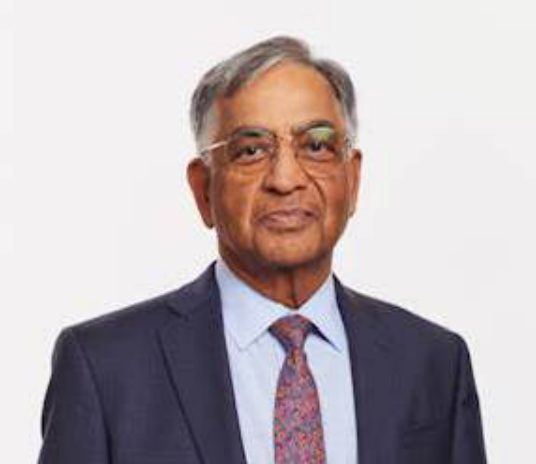
Vinay Malhotra (IIT Bombay, 1996) is CEO of SERVA Group, a global energy equipment manufacturer. He began his career as a trainee engineer in Egypt and spent nearly three decades at SLB, holding senior leadership roles, including Global Vice President of Digital Drilling and Managing Director for South Asia. Having worked across 12 countries, he brings a global perspective to business growth, operational excellence, and innovation. An engineer by training and a businessman at heart, Vinay continues to shape the future of the energy industry.

Join the conversation
Comments are moderated and may take a little while to appear. Please keep the discussion respectful and on topic.
Comments open soon.