Business & Entrepreneurship
Anyone Can Build. Now What?
AI can turn a weekend idea into a working product. But what happens when everyone can build? In the new idea economy, knowing what is worth building becomes the real competitive edge.
Very recently Sam Altman made an onstage appearance at Stripe Sessions.
It’s a big turnaround from when Silicon Valley used to laugh these people out of the room. Prior to the age of AI, you had to prioritize between the ideas in your backlog because each of them was going to take time. You designed your sprints according to those requirements. But when building is free (time to build tending to 0), the scarce thing left is the idea.
“For a long time, I think the most important ingredient that I looked for — YC looked for, that kind of this part of our industry looked for on a founding team — was technical talent. And that’s still very important, but now people who just really deeply understand their users and can’t code at all. I want to fund those people.”
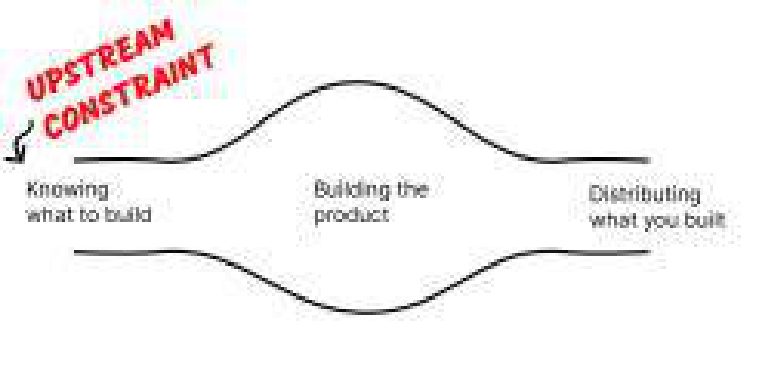
And that is the upstream constraint in the funnel of building a product. Sam Altman calls this the revenge of the “idea guys”. Everything I bring up in this essay is discussing my interpretation of what it means for you depending on where you sit.
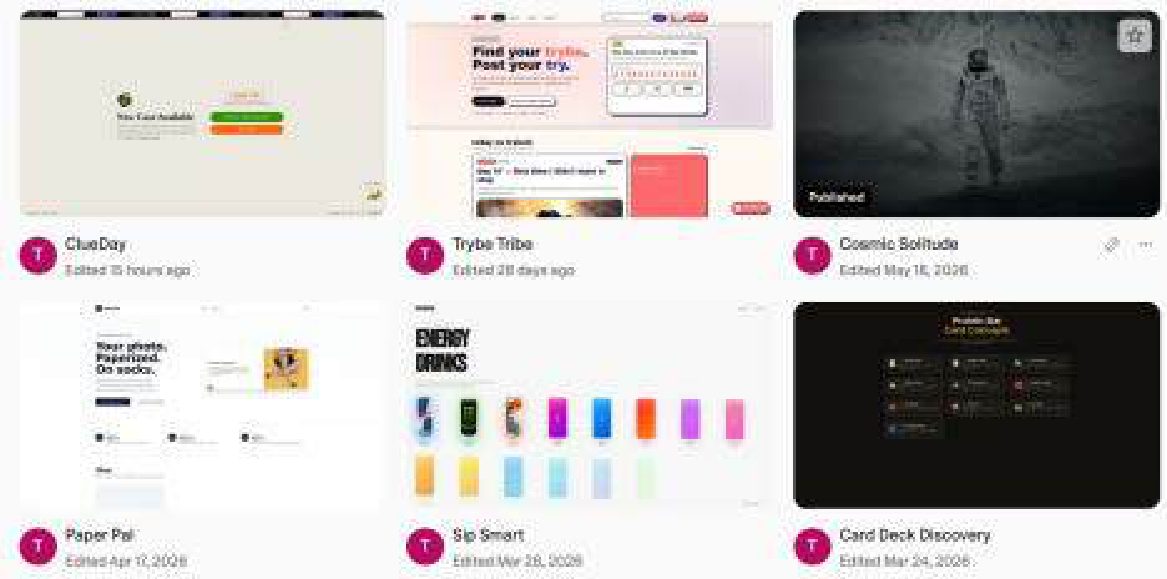
I would not have been able to build these a couple of years ago and given how limited and how difficult it would be to pursue any of these, even with engineering resources, they wouldn’t have made the cut. Now each of them is live by the weekend, which means the hard question is to know which one to double down on and pursue.
Which idea has a billion dollar market size? Which idea has a potentially exponential growth trajectory? Which idea will give outsized returns? The kind of questions that investors ask before writing a check are getting even more critical when the building is no longer the hard part.
The funnel
In an economy where every idea can be built, what is the Ultimate Problem to solve? (Yes yes, I know the Ultimate Answer is 42.)
The Ultimate Problem here really depends on you. When code is time-intensive it’s almost a boon, because if you are running slowly in the wrong direction, it is much easier to course correct: to scrap an idea, to pull back resources, to stop and reconsider.
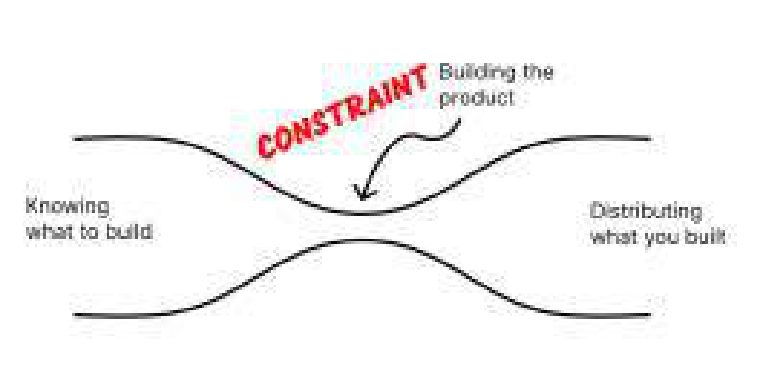
Think of it like a funnel:
Knowing what to build
Building it
Getting it to the people
Even if building is effectively solved, the two ends of the funnel still depend on external systems. The two ends still depend on external systems, and our discussion today is going to focus on the first one, which is knowing what to build.
The ability to build is not a moat
In a world where software and AI make building easy, the ability to build by itself is no longer a moat. Once anyone can build anything, the moat moves upstream, to knowing what to build.
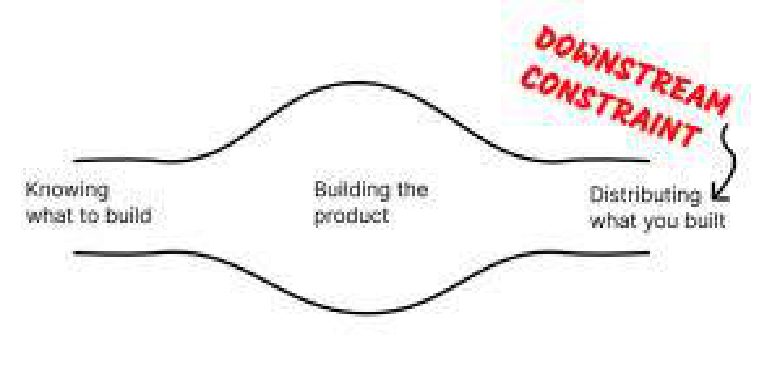
The second constraint is at the other end. The downstream impact of something built used to be that each release got the eyes it deserved and the love it deserved, because it had been built with that much TLC.
One could argue, keeping in line with the agile mindset and design thinking, that it does not matter how much you rationalize what to build, as long as there are customers to test it with, you can iterate and get feedback. But as I shifted from product to product marketing, I realised marketing has been unable to keep up with the number of changes, and not just the internal teams, the customers too. Existing customers ask where a button went, while new customers see a rapidly changing platform.
If you can be everything for everyone, and if everyone can build everything for everyone, why should one come to you? That question sounds abstract in an almost tongue twister way but bear with me as I lead us to an answer.
Why the answers are needed now
Prioritization is now about defining who you are able to get to and how you are able to get to them. Those questions need to be answered much faster than they did before.
Before, you would have iterated and taken a few months, spoken to people and taken another few months, then done some more iterations. That timeline has collapsed into itself. The answers you would have needed for the question you would have asked four months later are needed now. That is where the real problem, and to be honest, the real opportunity, lies.
If you know those answers, if you are an expert at understanding your industry, that is where your leverage is. Which brings me to you, who is reading this.
Let’s go collapse time
If you are creating with AI and you do not have the industry knowledge of the space you are interested in, you do not know what to build, and you do not know how to get it to people (yet). Knowing what to build is the upstream muscle you have not grown yet. Here is one fast way to grow it: can you collapse someone’s time from A to B faster than the next person can use AI to collapse that same time? Knowing exactly what to build for them is how you will do it.
Career stage
Senior in career (the Veteran)
Midway through career (the Operator)
Just starting career (the Execution Machine)
The first column is the one that decides the outcome in the idea economy. That is why the Veteran, who is weakest on tooling, will still be dangerous, and why the Execution Machine, who is fastest on tooling, is still, well, as good as the problems someone allots them.
I never like to put crosses, that is just not my style. I have put question marks because:
Everybody is trying to collapse time. If you can help them do it faster, they want you. That is where it pays to be a 10x engineer, to be familiar with the tools, to move with the tools, to be prompting and spending time on side projects. Wherever you sit on that curve, the table below is a rough map of your starting hand.
Knowing what to build
✓ Years in the field mean they can spot a problem worth solving and know what customers actually need
✓ Enough domain
knowledge to judge what’s important, without being locked into old assumptions
? Little industry exposure, so finds telling a valuable
problem from a dead end hard
Even at the mid-senior level, you can be an IC builder. If you know what to build, it is very easy to build it. Which is why I’ve seen the trend of more people shifting to IC tracks.
The channels are open to anyone willing to learn them, so a question mark here is a gap you can close significantly fast if you have a growth mindset.
Building the product
? The rapid-prototyping muscle has gone soft
? Capable, stretched thin by responsibilities, so hands-on building competes for time
✓ Native with the tools, fast at prompting, comfortable spinning up projects
What should you do differently?
Whatever column you are weak in is the one to attack because the market will drive towards people who can do both.
Veterans: Build and build fast. Get into the AI tools you hear people talking about. Spend a couple hours following tutorials and getting your hands dirty. Choose one problem that you have been seeing across all the experience you have, and start shipping. You don’t want tool knowledge to be the reason you don’t succeed.
Operators: You have your hands in everything, but you need to make sure you are protecting time for building among managing stakeholders, giving presentations, strategizing roadmaps, and more. Your growing domain judgement is only going to pay off if you can show that you can turn it into something tangible.
Execution Machines: Find a place to work which allows you to grow fast, both in skills and in domain knowledge. You grow at the rate your company grows. Join communities, get on calls with customers, listen with depth to leaders in town halls so you know the prioritization of the problems that are worth investing time into and building in.
All of this said, it is a very simplified way of thinking, because in reality every process is iterative when you are building things. Every step further you take, you get feedback that beats where you began.
The idea economy hands you near-infinite capacity to build. It will not hand you the reasons that you personally should be the one building. So talk to people, get into communities, understand why something is worth building when you have your ideas, and just get running.
About the author

Tanya leads Product Marketing at a YC-backed Series B startup using computer vision to prevent workplace injuries on manufacturing floors. She has previously worked as a Portfolio Manager leading P&L and go-to-market for global pump and motor product lines at Danfoss.
Tanya holds a dual degree BTech and MTech in Mechanical Engineering from IIT Bombay and a Master’s in Product Innovation from Carnegie Mellon University. She frequently speaks on manufacturing, computer vision, and vibe coding. Outside of work you can find her running and building clueday.com


Comments
Comments open soon.