Travel & Life
IIT Bombay? Never Heard of It.
No IIT dreams, no coaching—and a memorized eye chart at the interview. Suresh Sethi recounts the improbable journey from a Rajasthan village to IIT Bombay.
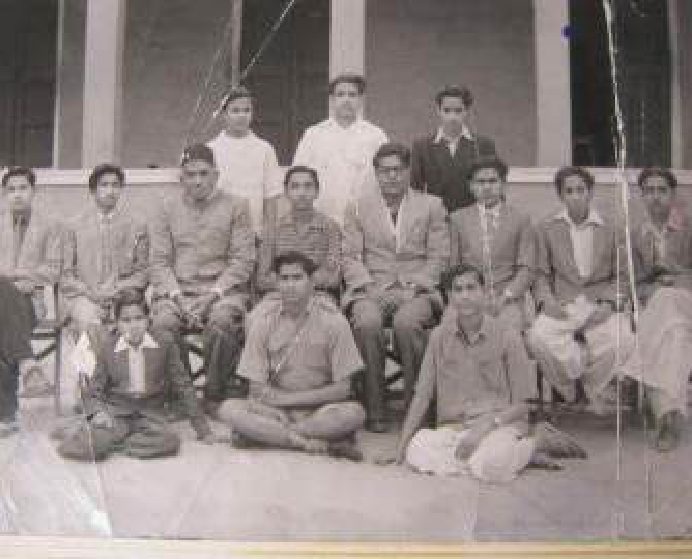
This story begins in 1959 when I was in Grade 8 at a higher secondary school, offering Grades 1 to 11 education in Ladnun, located at the edge of the Great Thar Desert in India. It describes my move to a high school (Grade 1-10) offering math and science specialization, and how that meant doing Grade 11 in college, and why that fortuitous move led me by chance to be aware of the premier engineering institutions known throughout the world as IITs. Moreover, the college education prepared me well for the IIT Entrance Exam, and I passed it. That followed a physical and an interview, presenting some interesting challenges described in the story.
Introduction and Schooling System in Rajasthan
This story begins in 1959 when I was in Grade 8 at Shri Mahavir Higher Secondary School in Ladnun, Rajasthan, India. A higher secondary school offered primary school level education (Grades 1-5), middle school level education (Grades 6-8), and higher secondary level education (Grades 9-11). The higher secondary level was a specialized education, and my school specialized in commerce, not math and science. However, my favorite subjects were math and physics, and I wanted to move to a school that offered a science specialization.
Ladnun, located at the edge of the Great Thar Desert, was a sleepy village with dusty roads and no electricity until I was 8. Running water came much later. It had no college and just three schools offering education above the middle school level. So, there were two other schools in the town that I could move to. Both of these were high schools and not higher secondary schools. A high school, as opposed to a higher secondary school, offered education until Grade 10, with Grades 9-10 being the high school level. So, given my interest in math and science, I moved to Shri Jaichandlal Bhutoria High School (JB High), which specialized in science education. In Grades 9 and 10 at JB High, I studied math (algebra and geometry) and science (physics and chemistry). The final exam for Grade 10 was conducted by the Board of Secondary Education in March/April 1961. On June 15, 1961, I received the graduation certificate stating that I passed with distinction in Mathematics and was placed in the First Division.
But there was a catch! In earlier times, the education system in Rajasthan consisted of high schools (Grades 9-10), intermediate colleges (Grades 11-12), undergraduate colleges (Grades 13- 14) offering BA and BSc degrees, and engineering institutes (Grades 13-16) offering BE degrees. By 1961, high schools were discontinued in favor of higher secondary schools, intermediate colleges were no longer needed, and undergraduate colleges and engineering institutes adjusted accordingly to take in students directly from higher secondary schools. For those graduating from high school, like me, going to Grade 11 in a higher secondary school was not an option. So, an option was created just for that year (a Goldilocks year) by having some colleges offer Pre-University education equivalent to Grade 11 as a bridge. However, since Ladnun had no college, I would need to move to another town or city for Pre-University education.
Family Situation and Admission to Birla College, Pilani
Let me digress here to describe my family situation. We were a large family, as my father had had 11 children, and I was the baby of the family. For a while, the only source of income was my father’s village shop that sold clothes. Partly due to the absence of a college in Ladnun, none of my brothers, sisters, or ancestors had a college education. The other factor was that the family needed money, so my elder brothers had to work to earn money after graduating from school. All this made it lucky for me to have the opportunity to study further. Moreover, being a good student in high school, I was admitted to pre-university education at Birla College, Pilani. Regardless, my mother was reluctant to send me to a college out of town, as she had no experience sending her older sons and daughters to study out of town. But the family eventually agreed that I go to Pilani for higher studies.
Pilani is a college town, and Birla College (now Birla Institute of Technology and Science, Pilani or BITS Pilani) was the best in Rajasthan. It also ranked highly overall in India. While it was not far from Ladnun, there was no direct train from Ladnun to Pilani. A late evening train from Ladnun arrived at Loharu Junction around 4 am, and the bus from Loharu to Pilani began around 7 am and arrived in Pilani an hour later. So, one fine evening in 1961, I, who had never traveled much and indeed never traveled alone, took the train and the bus to arrive in Pilani.
Tragic, Fantastic, and Miraculous Events in Pilani
Pilani was a brand-new experience of being alone and out of the house for the first time. I had a single room in Ram Bhavan, the hostel closest to the college where the classes were held. Unlike Grade 11 in a higher secondary school, we were taught by professors with Ph.D degrees! Also, we became the youngest students in the college compared to being the oldest students in a higher secondary school. So, there was much to look up to the upper-class college students on campus and in hostels/dormitories.
Some weighty events occurred during my one-year stay in Pilani. The first one was a deadly event. Two other students from Ladnun, Hukam Chand Pandya and Sampat Lal Bagra, also joined pre university classes at Birla College. One day, Hukam’s father from Ladnun visited Pilani and took Hukam, Sampat, and me to a water canal known as Shiv Ganga on the Birla College campus. This canal surrounds a beautiful marble temple in the style of the world-famous Khajuraho temple in India. It is a must-visit place that Pilanians often frequent. Although Hukam, Sampat, and I did not know how to swim, we waded in the shallow and slippery canal. At some point, Hukam and Sampat slipped and went underwater. The father swam to bring them out, unsuccessfully. I got out and started shouting, and some people who came to help were able to fish them out. Sampat survived, but sadly, Hukam did not. The awful news of the tragedy reached Ladnun, and my mother got scared and immediately asked me to leave Pilani and come home; no need for further education!
The second one was a fantastic event. During my first semester, I participated in the College-wide math competition and got a consolation prize, even though I was just a pre-university student. Our physics professor, P. C. Bhargava, was one of the judges, and he told me that I would have won the competition had I simply not answered one of the questions on the test. It was a trigonometry question, and we had not learned the subject yet in our math class, as it would be taught in the second semester! Not knowing trig, I thought it was a trick question and answered it wrongly anyway! Since wrong answers got negative marks to avoid guessing, I did not win the competition and got a consolation prize instead. Seeing some promise in me, Professor Bhargava also advised me to take Physics for higher studies, as there were exciting things, such as the Unified Field Theory, to work on. But I told him my brother thought I should become an engineer rather than a scientist from the job market perspective! Years later, when I was a professor at the University of Toronto’s Faculty of Management, I met Professor Bhargava at his residence in Vancouver, Canada, when he was a visiting Physics professor at the University of British Columbia, and he asked me after a few drinks, where he could go for an MBA! How ironic!!
The third event was miraculous! Amichand Baid, a former JB High student who was 3 years my senior, was already at Pilani’s Birla College when I joined. One fine morning in 1961, when I was still lying on my wooden cot bed on the porch (barāmadā) outside my Ram Bhavan room, Amichand gave me a cyclostyled form (pre-xerox) and asked me to fill it out and mail it. When I looked at it, it was a form for the Indian Institute of Technology (IIT) entrance exam. Until now, I had not heard of the famed IITs! As I mentioned earlier, none of my elders ever went to college and were unaware of the IITs. So, I never learned about the IITs while growing up in Ladnun.
IITs, Entrance Exam, and Interview
So, let me briefly describe the IITs before returning to my story. The IITs are a network of engineering institutions in India. Established in 1950, they are under the purview of the Ministry of Education of the Indian Government and are governed by the Institutes of Technology Act of 1961. The Act refers to them as Institutes of National Importance and lays down their powers, duties, and framework for governance as the country’s premier institutions in technology. The Act also required a qualifying and competitive Common Entrance Exam (CEE), known as the IIT-JEE (IIT Joint Entrance Examination), for the aspirants intending to enroll in these institutes. Based on the exam results, a selection of students needed to appear for an interview.
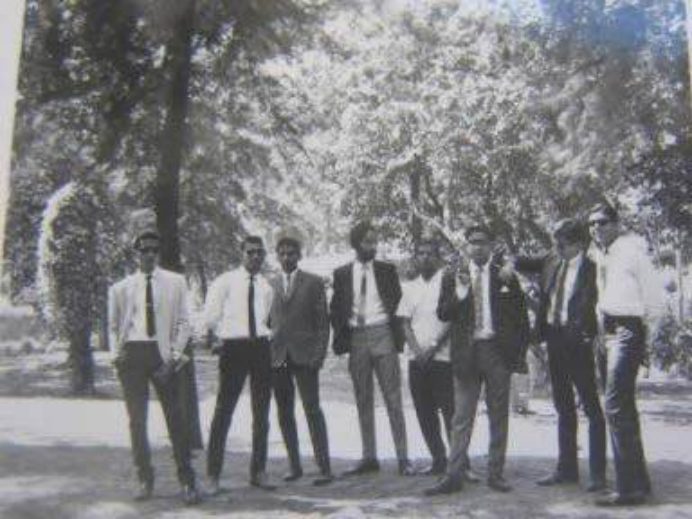
The first five IITs were IIT Kharagpur, IIT Bombay, IIT Madras, IIT Kanpur, and IIT Delhi, founded in 1950, 1958, 1959, 1959, and 1961, respectively. The first IIT-JEE exam was conducted in 1961. Because these were India’s top engineering institutions, the competition to get into them was fierce. Interviews followed the competition. An IIT Bombay (IITB) classmate learned from the interviews following the 1962 IIT-JEE competition that about 100,000 aspirants took the exam with us, and about 1200 were accepted into the five IITs, giving an acceptance rate of 1%. According to another well-informed classmate, IITB accepted 211 students in 1962. So, we were a pretty exclusive group!
After completing and mailing the form, I received a letter to appear in Jaipur for the 1962 IIT-JEE. In those days, no syllabus or sample questions were available to prepare for the entrance exam, unlike these days, where examinees can enroll in expensive coaching institutes, more like boot camps, in India and abroad, which provide intensive drills for the IIT-JEE. All we knew then was that there would be four exams: Physics, Chemistry, Math, and English, spread over two mornings and two evenings. The only preparation was what we had covered in Grade 11 or Pre-University classes. In this regard, I believe I received a better education on the abovementioned subjects at Birla College than those graduating in Grade 11 at a higher secondary school.
So, I went to Jaipur by train a day before the examination date, and I was given a room in the Maharani College of Jaipur hostel. Nervously, I went to the exam room for the next two days, cold, not knowing what questions I would face. Fortunately, I cleared the entrance examination hurdle, as I happily received a letter asking me to appear for an in-person interview at Kanpur sometime afterward. So, on one fine day in 1962, I went to Kanpur by train for the interview.
As mentioned earlier, IIT Kanpur was founded in 1959, and its intended campus was not ready in 1962. Therefore, the interview was conducted in a Harcourt Butler Leather Institute building, a temporary home of IIT Kanpur. I learned from other students converging in Kanpur for the interview that there will also be a physical exam, including an eye exam, as part of the interview. I, then a 16-year-old, got worried that I would fail the eye exam and would not be admitted. I used to sit in the front row of my classes to be able to read the blackboard, so I knew I needed eyeglasses, but I did not have them since Ladnun had no optometrist, and I did not think of getting them in Pilani. So, on the morning of the interview, this clever-by-half naïve kid from Ladnun went to the Kanpur General Hospital for glasses. They put dilating drops in my eyes in the hospital, with which I went to the interview venue. Now, I could see even less, and I was sure I would fail the eye exam at the interview in the next hour or so. Fortunately, they took in six candidates at a time for the physical. In turn, they took our weight, measured our chest, etc., and there was no particular order to these activities. That lack of order allowed me to go to the eye chart and memorize it! When my turn for the eye exam came, I half-closed one eye with my hand, and the examiner asked me to close it fully. I jokingly said I could close both eyes if he liked, and
he laughed! As I had memorized the whole chart, I could read any line on the chart he requested, and I passed the test with flying colors.
Then came the interview! I was on one side of a long table, and maybe 12 older men were on the other. It felt like I was at the Last Supper! At some point, when asked what I would like, I said Mechanical Engineering at IIT Kharagpur. It was the first IIT founded in 1951 and the closest, among all the IITs, to where my brothers lived in Calcutta (Kolkata). They said Mechanical Engineering at IIT Kharagpur was sold out, but Civil Engineering was available there! I replied no to that as I wanted only Mechanical Engineering. Then, they offered me Mechanical Engineering at IIT Bombay. And I happily told them that I would take it. And that is how I ended up at IIT Bombay, accidentally or perhaps miraculously!
About the author
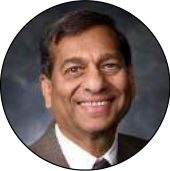
Suresh P. Sethi is Eugene McDermott Chair Professor of Operations Management and Director of the Center for Intelligent Supply Networks at The University of Texas at Dallas (UTD). He has B. Tech from IITB, MBA from Washington State University, and MSIA and PhD from Carnegie-Mellon. He has published 11 books and over 400 research papers in management, economics, and engineering. He initiated and developed doctoral programs in operations management at UTD and University of Toronto. He built the operations management area of UTD’s Jindal School of Management into its current research powerhouse. Production and Operations Management Society (POMS) awards the Suresh Sethi Best Interdisciplinary Paper Award every two years. Prestigious honors and awards received by him include Fellow of the Canadian Academy of Science, IEEE Fellow, INFORMS Fellow, SIAM Fellow, POMS Fellow, AAAS Fellow, IITB Distinguished Alum, Carnegie Mellon University’s Tepper School of Business-Alumni Achievement Award, and POMS President (2012).
Join the conversation
Comments are moderated and may take a little while to appear. Please keep the discussion respectful and on topic.
Comments open soon.