Perspective & Opinions
Who Remembers Noyce?
Steve Jobs admired him. Silicon Valley owes him. Sunil Mehta revisits Robert Noyce, the chip pioneer and Intel co-founder whose influence outlived his fame.
I have long been baffled by the relative obscurity of Robert Noyce.
From the late 1950s through the early 1980s, Noyce was a living legend in the technology world. He was called the “Mayor of Silicon Valley” and even the “Father of Silicon Valley.” Yet today, even many people who work in technology know surprisingly little about him.
I encountered this paradox while researching my novel The Compass, which follows pivotal moments in the lives of Albert Einstein, Robert Noyce and Steve Jobs. The deeper I went into Noyce’s story, the more remarkable it seemed that he has faded into obscurity.
Gordon Moore is remembered for Moore’s Law. Andy Grove became synonymous with Intel’s rise. Steve Jobs became perhaps the most celebrated entrepreneur of the digital age. Ironically, Noyce was one of the few people Jobs himself idolized, seeking him out as a mentor during Apple’s early years.
And yet, who remembers Robert Noyce?
The man who helped create the technology, companies and even the distinctive business culture that made Silicon Valley possible has somehow receded from public memory.
How did a man who helped create the modern technological world become so much less famous than the world he helped create?
The Invention That Changed Everything
Noyce’s most celebrated technical achievement came at Fairchild Semiconductor in 1959.
A few months earlier, Jack Kilby at Texas Instruments had demonstrated an early form of the integrated circuit. It was an ingenious proof of concept, but it did not solve the critical problem of how to interconnect the components in a way that could be efficiently manufactured and scaled—the “tyranny of numbers.”
Noyce independently conceived a different—and crucially, more manufacturable—approach. Building on Jean Hoerni’s planar process, he devised a way to fabricate the components and interconnect them with metal lines on the surface of a single piece of silicon.
It was the first practical monolithic integrated circuit.
Before Noyce’s IC invention, increasingly complicated electronic systems required growing numbers of individual components and connections. The integrated circuit provided a way out: put the components and their interconnections together on a single chip.
The breakthrough helped launch a technological revolution, eventually making possible everything from personal computers and smartphones to the Internet and modern artificial intelligence.
But the practical integrated circuit was only one chapter in Noyce’s remarkable career.
The Man Who Helped Create Silicon Valley
Noyce had already played a pivotal role in one of Silicon Valley’s foundational events.
In 1957, he and seven colleagues left William Shockley’s troubled semiconductor company. The group Shockley famously branded the “Traitorous Eight” needed financing for a new venture.
Noyce and a colleague traveled to New York to make their case to Sherman Fairchild. Fairchild later said that Noyce’s impassioned vision of a world transformed by semiconductors helped persuade him to back the new enterprise.
That is how Fairchild Semiconductor was born.
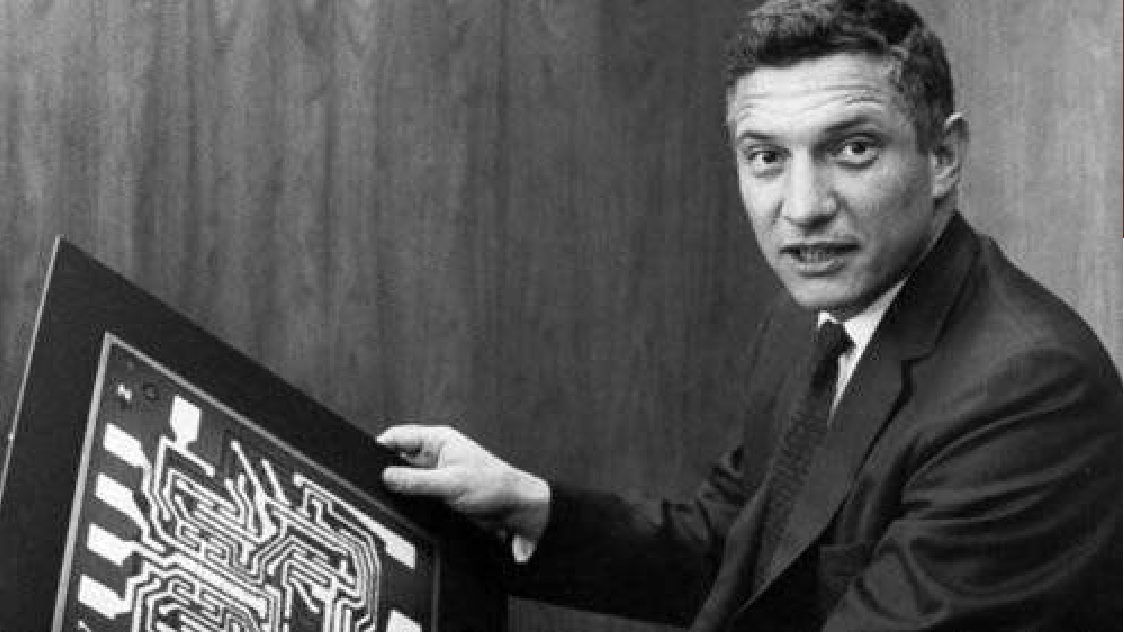
Robert Noyce, co-founder of Fairchild Semiconductor and Intel and co-inventor of the integrated circuit.
Its significance is difficult to overstate. Fairchild became one of the great spawning grounds of Silicon Valley. Engineers left to create scores of new companies—the so-called “Fairchildren”—establishing a pattern of talented people leaving established companies to build something new.
Noyce did not merely participate in that culture.
He helped establish it.
“Sure. We Can Do That”
One early episode captures Noyce’s remarkable boldness.
Fairchild was just a few months old when IBM needed advanced silicon transistors for a navigational computer. Texas Instruments, then a giant compared with tiny Fairchild, already had silicon devices, but they were not fast enough.
Fairchild was invited to bid. When IBM presented demanding specifications for a sample batch of 100 transistors, Noyce responded with characteristic confidence: “Sure. We can do that.”
There was only one problem: Fairchild had not yet built a single transistor.
But Noyce and his team took on the challenge. Five months after the company was founded, Fairchild delivered the 100 transistors, on schedule. At an electronics trade show the following month, the founders realized they had something their competitors did not.
“We scooped the industry!” Noyce exclaimed afterward.
The episode reveals his unusual combination of technological understanding, optimism and willingness to take a calculated risk—qualities that would recur throughout his career.
An Idea Ahead of Its Time
One of Noyce’s most consequential contributions is far less well known.
By 1964, Fairchild was producing integrated circuits, but they were still expensive. Conventional business logic said they should be priced above what they cost to manufacture.
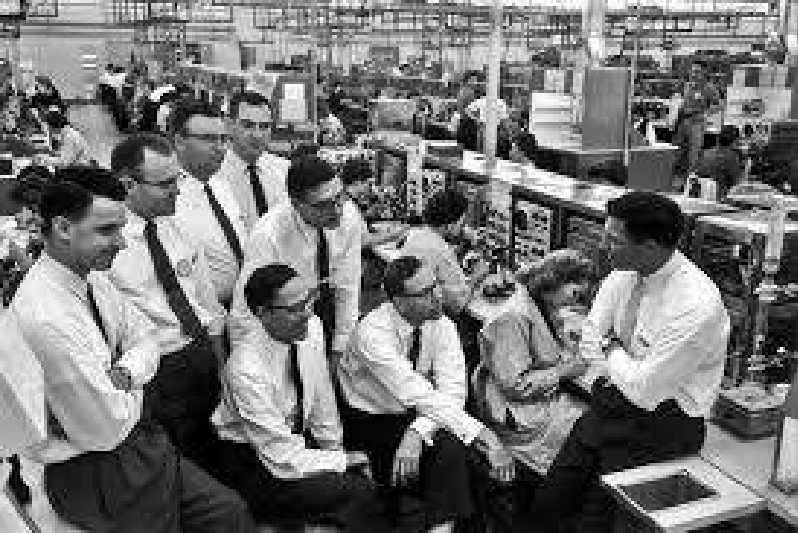
Noyce did something radical.
At an industry conference, he announced that Fairchild would sell some of its simpler integrated circuits for less than it cost to make them. The announcement stunned even his own colleagues.
Why deliberately lose money?
Because Noyce understood where the technology was going.
As volumes and yields increased and more circuitry was packed onto silicon, costs would fall dramatically. Lower prices would spur greater adoption and volume, driving costs down further.
Today that logic seems almost obvious. In 1964, it was revolutionary.
A year later, Gordon Moore published the article containing his observation that became known as Moore’s Law—the expectation of a relentless exponential increase in integrated-circuit complexity.
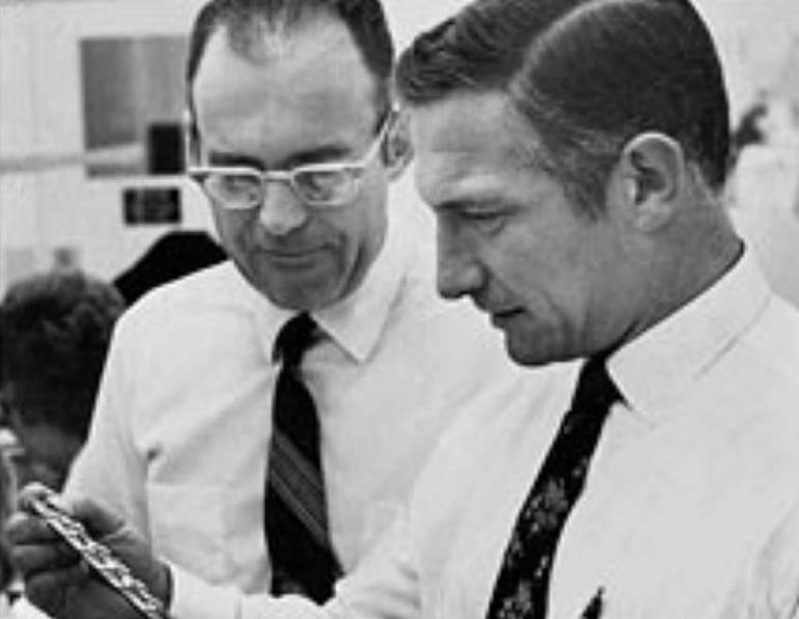
Moore later described Noyce’s pricing decision as an “invention” comparable to his integrated circuit, calling it “Bob’s unheralded contribution to the semiconductor industry.”
It is an apt description of much of Noyce’s legacy: unheralded.
Building Intel—and a Different Kind of Company
In 1968, Noyce and Gordon Moore left Fairchild and founded Intel.
They wanted a company built around continuous technological innovation—and Noyce helped give it a distinctly different culture.
The traditional corporation was hierarchical, with private offices, privileges and visible symbols of rank. Noyce preferred informality and accessibility. Authority, he believed, should come from ideas and competence rather than titles.
At Intel, he famously worked in a cubicle rather than an executive suite, encouraged direct communication and helped extend stock ownership more broadly among employees. Tom Wolfe’s celebrated portrait of Noyce later described a culture that rejected many of the “feudal” conventions of traditional corporate America.
This less hierarchical model would spread throughout Silicon Valley.
Noyce was helping invent not merely new semiconductor products, but a new model for a technology company.
The Microprocessor Revolution
Then came another technological turning point.
In Intel’s early years, the Japanese calculator company Busicom contracted with Intel to develop a family of chips. Intel engineer Ted Hoff came to Noyce with a radically different approach: instead of many specialized logic chips, why not create a general-purpose programmable processor?
The idea had skeptics. Noyce recognized its potential.
He approved the project, orchestrated the hiring of Federico Faggin to turn the concept into working silicon, and became one of the microprocessor’s most dedicated champions. His near-legendary stature in Japan also proved invaluable in negotiations with Busicom, and Intel ultimately obtained the rights to sell the processor beyond Busicom’s calculators.
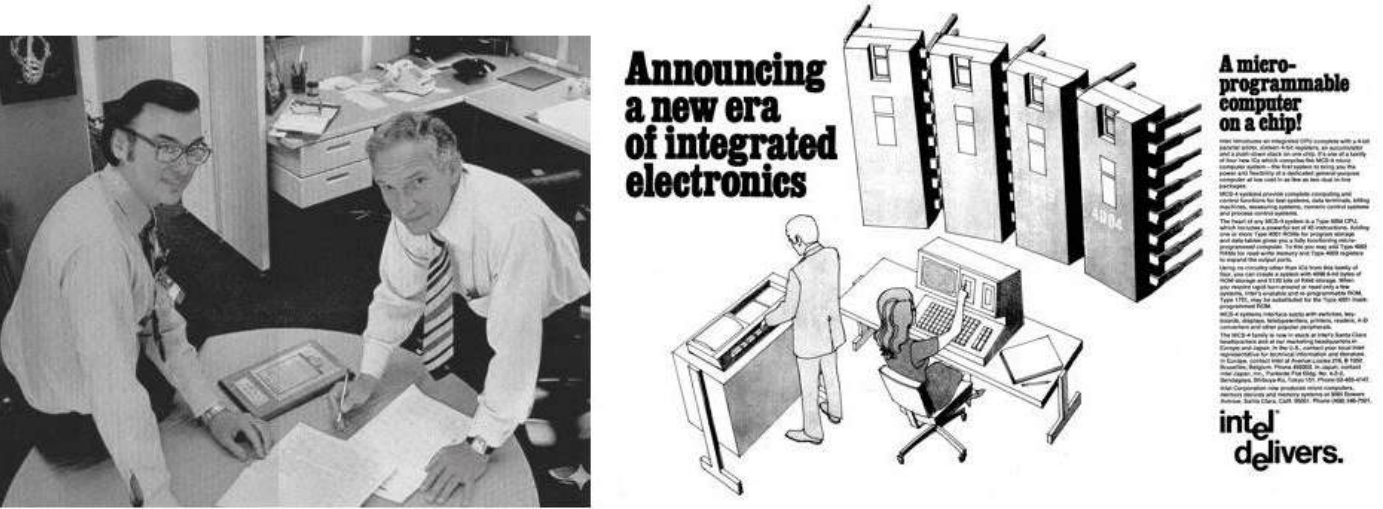
In 1971, Intel introduced the 4004, the first commercially available general-purpose microprocessor.
Robert Noyce and Gordon Moore co-founded Intel in 1968, building the new company around continuous technological innovation and a markedly less hierarchical corporate culture.
Around the same time, Intel was transforming another major branch of the industry: memory. Products such as the 1103 DRAM helped move computing from magnetic-core memory toward semiconductor memory produced at commercial scale.
Microprocessors and memories—the two product categories Intel helped establish in those formative years—remain fundamental pillars of the semiconductor industry more than half a century later.
Seeing the Future Before Others Did
The pattern repeated.
In semiconductor manufacturing’s early days, Fairchild engineers had to invent much of their equipment themselves. Resourceful and hands-on, Noyce built an early step-and-repeat camera for photolithography, using matched 16mm lenses from a local camera shop to print the fine patterns needed for integrated circuits. Lithography would become fundamental to the relentless miniaturization of chips.
Noyce also championed new approaches to manufacturing. In the mid-1960s, Fairchild established an assembly and test operation in Hong Kong, an early milestone in the global manufacturing model that would come to characterize the industry.
It was this aspect of Noyce that particularly fascinated me while writing The Compass: history often remembers the person who has the breakthrough, but innovation also depends on those who recognize a transformative idea, believe in the people behind it, and help make it happen.
Noyce had an extraordinary ability to recognize a transformative idea, nurture it, believe in the people behind it, and make it happen.
Robert Noyce and Ted Hoff in Noyce’s office (left), alongside Intel’s famous 1971 ad for the 4004 microprocessor (right), which helped usher in a new era of electronics.
Late in his career, as Japanese manufacturers surged, Noyce became the first chief executive of Sematech, the government-industry consortium established to strengthen American semiconductor manufacturing.
Noyce died suddenly in 1990, only two years after taking the helm. But Sematech would play an important role in restoring U.S. competitiveness, particularly by strengthening the domestic semiconductor-equipment infrastructure.
It was an appropriate final act.
The entrepreneur who had spent his career creating companies devoted his final chapter to strengthening the technological ecosystem he had helped build.
The Forgotten Icon
So why did we forget Robert Noyce?
Part of the explanation may lie in Noyce himself. He did not believe in self-promotion, and his unassuming style differed markedly from the larger-than-life technology leaders who followed him.
He also stepped away from Intel’s leadership relatively early, leaving Gordon Moore and Andy Grove more publicly associated with the company as it grew into one of the world’s most important technology companies.
And Noyce died at only 62, missing the public celebration of Silicon Valley that accompanied the Internet, personal-computer and smartphone revolutions.
By the time technology entrepreneurs became global celebrities, the man who had played a principal role in creating the world they inherited was already gone.
Just consider his record:
Fairchild Semiconductor. The first practical monolithic integrated circuit. Anticipating—and helping inspire—Moore’s Law. Intel. A new model of Silicon Valley corporate culture. Semiconductor memory at commercial scale. The microprocessor revolution. The globalization of semiconductor manufacturing. The effort to restore American semiconductor competitiveness.
Few people have stood at the center of so many technological turning points.
Seeing the Future Before Others Did
For those of us who studied at IIT-Bombay, there is another reason Noyce’s story deserves attention.
We are part of a community that places enormous value on technical excellence. Noyce certainly possessed that. He was a physicist, an inventor and one of the architects of the integrated circuit. But his career suggests that technical brilliance, by itself, is rarely enough to change the world.
Noyce repeatedly saw possibilities before they were obvious and took bold steps to make them happen. He was willing to tell IBM, “Sure. We can do that,” before his young company knew exactly how. He understood that integrated circuits should become dramatically cheaper before conventional economics said they should. He recognized the promise of the microprocessor and championed it even though the original idea was not his. And he understood that talented people do their best work when hierarchy does not get in the way of ideas.
These seem to me particularly relevant lessons for the larger IIT community.
Technical excellence matters—but so does the courage to act before every uncertainty has disappeared.
Innovation is not only about having the original idea; it is also about recognizing a powerful idea in someone else’s hands.
Great institutions are built not simply by attracting talented people, but by creating cultures in which they are trusted to challenge assumptions, take risks and build things that did not exist before.
There is another lesson that may be even more important. Noyce’s greatest legacy was not any single invention or company. It was the ecosystem he helped set in motion. Fairchild produced the “Fairchildren.” Intel helped seed another generation of companies and technologies. Engineers became entrepreneurs; employees became founders; knowledge moved outward rather than remaining locked inside institutions.
That idea should resonate with a community like ours. The ultimate measure of an institution such as IIT Bombay is not only what happens on its campus, or even what its graduates individually accomplish. It is also what they enable others to accomplish—the companies they create, the people they mentor, the ideas they support and the institutions they leave stronger than they found them.
Perhaps that is the most enduring lesson of Robert Noyce.
When I began writing my novel The Compass, I chose Noyce as one of its three central historical figures, alongside Albert Einstein and Steve Jobs. Einstein helped transform our understanding of the physical world. Jobs helped transform the way ordinary people interact with technology.
Between them stands Noyce—the inventor, entrepreneur and institution builder who helped create the silicon foundation on which the digital world was built.
His name may not be as familiar as theirs.
His legacy should be.
Robert Noyce was not merely present at the birth of Silicon Valley. He was instrumental in making it possible.
About the author
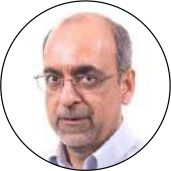
Sunil Mehta is an IIT-Bombay alumnus (B.Tech. ’80) who went on to earn three graduate degrees in engineering from Penn State and MIT. He has spent more than forty years in Silicon Valley in technical and leadership roles at companies such as Intel and AMD and is currently an executive at an edge-AI chip startup. He holds 92 U.S. patents and has authored 18 technical publications. His debut novel, The Compass, blends historical fact with imaginative storytelling to explore the lives of Albert Einstein, Robert Noyce and Steve Jobs and the origins of Silicon Valley.
Join the conversation
Comments are moderated and may take a little while to appear. Please keep the discussion respectful and on topic.
Comments open soon.