Society
Refuse. Resist. Don’t Retaliate.
Nonviolence is a strategy for challenging power, not simply avoiding conflict. Krishna Dhir traces its evolution through Gandhi and beyond, including its conditions and limits.
In the history of India’s Independence Movement, Gandhi’s speech at Gowalia Tank in Worli, Bombay, calling on the British to “Quit India”, was highly significant. However, the question that remained persistent in my understanding was this: How did Gandhi’s “Quit India” call become a collective, coordinated, nation-wide effort, in spite of: (a) India’s immense diversity and (b) practically every national leader of the movement being arrested immediately after the call? With further contemplation, I became increasingly aware of (a) the immense power of nonviolence as both a political and social strategy, and of (b) the remarkable simplicity and ease of its implementation in an individual’s everyday life! I hope to describe these in this article as a technique that any thinking individual can adopt. Although one could review the ancient philosophies of Buddha, Ashoka, and others, I restrict my narrative to recent times and describe nonviolence as a modern strategy that evolved from noncompliance through passive resistance to nonviolence.
Noncompliance
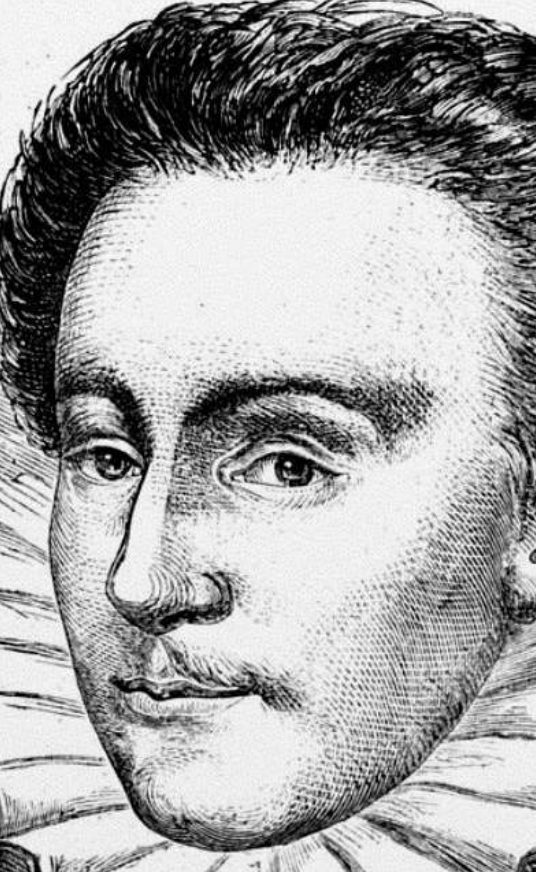
Étienne de la Boétie was born in Sarlat-la-Canéda, in the region of Périgord in southwestern France, on 1st November 1530. At the time, the reign of King Francis I was witnessing major cultural changes. In 1517, Martin Luther had already challenged the Catholic Church through his “Ninety-five Theses”. Francis I had a reputation of cruelty. Although La Boétie died on 18th August 1563 in Germignan, near Bordeaux, in his short life he had witnessed brutal exercise of imperial power by successive kings. He questioned ‘voluntary servitude’ by the masses to the will of a single individual. He stated that dictators had power because the abused gave the tyrants the power by consenting to be dictated. He saw obedience of the ruled as the basis for their domination. His prescription was noncompliance. If the subjects ruled by a tyrant simply refused to obey, the tyrant would weaken.
Civil Disobedience
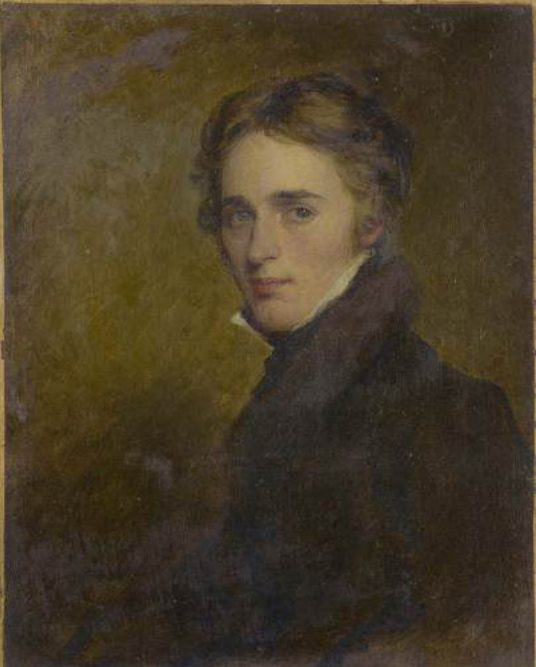
Poet Percy Bysshe Shelley wrote essays on political, social, and philosophical matters. He was born in Warnham, in England, on 4th August 1792, and died in the Gulf of La Spezia, in the Kingdom of Sardinia, on 8th July 1822. Shelley contemplated the French Revolution and the rise of his contemporary Napoleon Bonaparte. He concluded that violent response to military despotism provided the despots opportunities to impose their will. Instead, he promoted civil disobedience. He was influenced by Greek philosophers and by John Frank Newton’s “The Return to Nature”. He became a vegetarian and shunned violence. The Peterloo Massacre took place on 16th August 1819, in Manchester, at the St. Peter’s Field. Eighteen people were killed and hundreds injured, when cavalry charged into a crowd of about 60,000 people gathered to demand reforms in parliamentary representation in response to chronic economic depression following the Napoleonic Wars of 1815. “Manhood Suffrage” petition of nearly 750,000 people had been rejected by the House of Commons. At the time, Shelley was in Italy. On learning of the tragedy about three weeks later, he wrote the poem, “The Mask of Anarchy”, which has been described as the first modern statement of nonviolent resistance.
Transcendental Movement
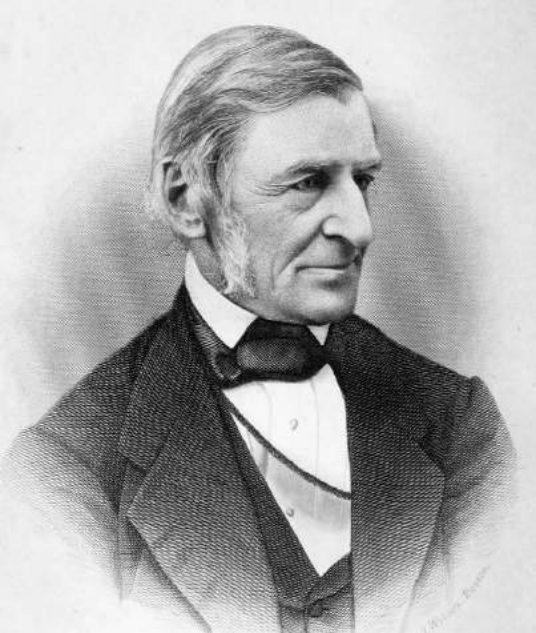
In 1826, Ralph Waldo Emerson, aged 23, went to St. Augustine in Florida, seeking warm weather to improve his poor health. There he befriended the nephew of Napoleon Bonaparte, Prince Achille Murat. The two engaged in spirited discussions on religion, society, philosophy, and government. Emerson also witnessed a slave auction and became an abolitionist. Starting in about 1830, he began to lead the Transcendental Movement, which brought together 19th century writers and philosophers. They promoted idealistic ideas that linked all creation; that humanity was essentially good; and that insight was superior to logic, even experience, for acquiring wisdom and knowing the truth. Transcendentalists saw divine experience inherent in everyday events, and reliance on a distant heaven as futile. They took great interest in the ancient Hindu Vedas and Chinese scriptures. They sought Divinity through personal knowledge of God, rejecting the need of an intermediary for spiritual guidance. They embraced idealism, opposed materialism, and focused on natural ecological harmony. Henry David Thoreau met Emerson in 1837. In 1841, Thoreau moved into the Emerson household and for about four years tutored Emerson’s children. In 1845, he built himself a small hut on Emerson’s property in the forest, on the shores of Walden Pond. In 1854, he developed his defining work, “Walden: or Life in the Woods”.
Pacifism
Pacifism, a term coined by Émile Arnaud, applies to a range of approaches deployed to resolve conflicts, international or domestic, through peaceful means. Pacifism rejects the use of military or war; opposes application of organized or governmental force; and use of physical violence to achieve political, social, or economic goals. Different principles underscore the perspectives of the pacifists. The deontological principle suggests that bringing harm to individuals, whether through a wholesale war or through individualized physical violence, is morally wrong. The pragmatic, utilitarian principle suggests that the cost of war and interpersonal violence are too high. Absolute Pacifists generally reject the theories of “Just War”. They believe that human life is invaluable; a human being should never be killed, no matter what, not even in self-defense. However, absolute pacifism is criticized on the grounds that it leaves one with no recourse in the face of violence.
In the early 16th century, the Protestant Reformation created a variety of new Christian sects. Among them were churches that sought adherence to principles of peace. Prominent among them were “The Quakers”, who are characterized by the shared belief that everyone has the capacity to experience the light of Divinity within oneself. Accordingly, somewhat like the Transcendentalists, they believe that it was possible to have direct, personal experience of Christ, without an intermediary agent such as a clergy. The rural Quakers showed limited interest in financial markets. Their focus was on family bonds and on the role of women as the keepers of the faith and arbitrators of spiritualism in everyday life. By the mid-19th century, the Quakers in Great Britain developed an interest in starting missionary activities in the East. Their first overseas effort outside the UK and USA was in India. In 1866, the British Quakers came to Benaras. Similarly, the Quakers in Ohio, USA, sent missionaries to India in 1896. They also created missions at various locations in Africa.
Passive Resistance
Lev Nikolayevich Tolstoy was born on 9th September 1828 in Yasnaya Polyana, and died on 10th November 1910 in Astapova, Ryazan. He is generally known as Leo Tolstoy (photo 4). His 17th century ancestor, Pyotr Andreyevich Tolstoy, was made a Count by Peter the Great. Although not a diligent student, Leo Tolstoy studied law and oriental languages at Kazan University. He left his studies midway; lived a leisurely life in Moscow, Tuli, and Saint Petersburg; ran up a heavy debt through gambling; and then, joined the army. He was recognized for courage as an artillery officer in the Crimean War but was greatly affected by the vast scale of killings and the number of deaths.
During 1857, and again in 1860-61, Tolstoy travelled through Europe. In Paris, he was appalled by a public execution. He became a spiritual anarchist, who abhorred violence. His views were reinforced when he became familiar with the Hindu concept of ahimsa through a German translation of Tirukkural, an ancient Tamil classic. Tolstoy had read “Les Misérables” before he met Victor Hugo in Europe during 1860-61. He also visited Pierre Joseph Proudhon, who was exiled in Brussels. There, Tolstoy reviewed the manuscript of Proudhon’s forthcoming book, “La Guerre et la Paix”, and conceived the title for his own masterpiece, “War and Peace”.
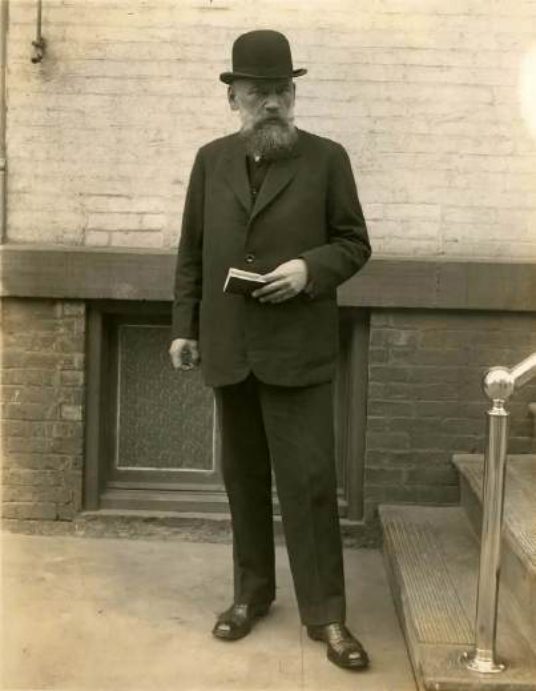
Tolstoy was influenced by Christian, Buddhist and Hindu literature on ascetic acceptance of poverty by those born in wealth. The choices made by Francis of Assisi and Siddhartha, along with renunciation prescribed by the Hindu concept of Sanyas, were consistent with Mathew 19: 24: “It is easier for a camel to go through the eye of a needle, than for a rich man to enter into the kingdom of God”. He was greatly influenced by the “Sermon on the Mount”. Leo Tolstoy understood the injunction to turn the other cheek as a commandment of nonresistance to evil associated with coercion. This evolved into a doctrine of pacifism and resistance without violence.
In 1908, Leo Tolstoy wrote “A Letter to a Hindu”. In this work, Tolstoy articulated his belief that nonviolent resistance would be the appropriate means for India to attain its independence from Britain. At that time, Gandhi was in South Africa, beginning his activism against discriminatory treatment of South Africans and South Asians by the British. Gandhi and Tolstoy established further correspondence between them. Gandhi named one of his two Ashrams in South Africa, the “Tolstoy Colony”.
Nonviolence
The Gandhian concept of nonviolence has been influenced by extensive literature derived from Hinduism, Islam, Christianity, Sikhism, Buddhism, Jainism, and others. However, these concepts have also been influenced by philosophies of La Boétie, Shelley, Emerson and Thoreau, The Quakers, Tolstoy, and others. La Boétie had questioned the wisdom of a society allowing absolute power to reside in the hands of one single individual. Noncompliance only requires that an individual not go along with the expectations of another, be the other an individual, the society, or the government. Civil disobedience took matters a step further. Shelley argued that if one’s right to express oneself through a vote was denied to an individual, the resulting government had no right to expect the obedience of that individual. Committed to ecological harmony, Thoreau felt it was appropriate to withhold taxes from a government engaged in unethical practices. The pacifism of the Quakers was in keeping with their belief that one must not kill. Tolstoy’s passive resistance emerged from his abhorrence of imposition of one’s will upon another.
Gandhi’s Innovations
Gandhi developed the idea of satyagraha as a nonviolent strategy of protest. The primary objective of satyagraha was to nonviolently provoke the oppressor; and additionally, if and when the provocation resulted in retaliation by the oppressor, the protestor was to remain nonviolent. The goal was to seek in the opponent a “change of heart” and the “recognition of the injustice” being protested. Gandhi identified prerequisite conditions that must prevail to enhance the efficacy of nonviolent strategies applied against both political or social injustices: He recognized that the effectiveness of the nonviolent provocation increases (a) as the opponent’s intellectual capacity to discern the motivation of the nonviolent protest increases. The presence of an intellectual capacity also increases (b) the effectiveness of the nonviolent protest in proportion to the violence meted out by the oppressor. The effectiveness of such nonviolent protest is enhanced (c) if the oppressed protestors have the capacity to be violent but choose not to be so. These prerequisites required that the protestor maintain (d) a sense of respect for both, himself and the opponent.
Nonviolence since Gandhi
Gandhi’s satyagraha went beyond the ideas of La Boétie, Shelley, Thoreau, the Quakers, and Tolstoy. Gandhi’s nonviolence was not passive, but a positive, active force. Gandhi introduced the term, duragraha, or “holding on by force” or through coercion, to differentiate between a protest that harasses and a protest that enlightens the opponent. “Noncompliance” and “passive resistance” resulted from the absence of mutual respect, pacifism and “civil disobedience” resisted exploitation, and “ecological harmony” was at the heart of the transcendental movement. By the time of his “Quit India” call to the British, Gandhi had already demonstrated to the general population of India, through prior applications of nonviolent strategies to both, political and social injustices, that such strategies could be implemented by anyone, at both, small and large scales, in his or her own personal situations. Subsequent to Gandhi’s innovations, nonviolent strategies have been applied against injustices all over the world. What follows are but a few illustrations.
When Rosa Parks, riding a bus in Alabama, was arrested for refusing to give up her seat reserved for whites only, about 40,000 Afro-Americans boycotted the buses from December 1955 to December 1956, preferring to walk or carpool. Eventually, the Supreme Court declared segregation to be anti-constitutional. Martin Luther King, a Baptist minister, led a nonviolent civil rights movement to ensure equal rights to minorities in the United States of America (USA). He was exposed to the concept of nonviolent resistance while reading Henry Davis Thoreau’s On Civil Disobedience. Then he researched the work of Gandhi in India and dedicated himself to Gandhian principles of nonviolence. The Civil Rights Act was signed into law in the US in 1964, the year King received the Nobel Peace Prize.
From 1948 to early 1990s, South Africa, dominated by its white minority population, stratified minority rights in the order of Colored, Indians, and Black Africans. In the 1950s, Nelson Mandela, Walter Sisulu, and Oliver Tambo, followed Gandhian policy of nonviolence to lead a campaign against this policy of apartheid. Many volunteers courted arrest by entering places reserved for ‘whites only’ and burning their ‘passbook’ identifying their race. They did not defend themselves in the courts and refused to pay the imposed fines.
In 1956, Nelson Mandela was charged with treason. The trial lasted for five years. In March 1960, 7,000 demonstrators approached a police station in Sharpeville. When tear-gassing them failed, the police opened fire. This killed or injured a couple of hundred adults and many children. Many thousands were arrested. Mandela abandoned the nonviolent approach, and swayed the leaders of his political party, the African National Congress (ANC), to create a military wing called Umkhonto we Sizwe. Mandela believed that the Government had not met the intellectual capacity prerequisite to appreciate the ANC’s nonviolent posture, and that the angry youth would take up arms regardless. He had accepted nonviolence as a tactic, not a principle, and even received military training in Algeria and Ethiopia. He was arrested, tried for sabotage, and jailed for life in 1964. As 1989 began, Botha was succeeded by F.W. de Klerk as President, who returned freedom to the press, released political prisoners, and suspended death sentences. Nelson Mandela was released in February 1990. Apartheid was abolished in 1991. Nelson Mandela and F.W. de Klerk received the 1993 Nobel Peace Prize. Mandela became the President of South Africa in May 1994, with F.W. de Klerk and Thabo Mbeki as deputy presidents.
Many more examples may be cited, such as specific protests managed by Vinoba Bhave and Baba Amte in India for uplift of the poor and disadvantaged, Mabo and Lingiari in Australia for return of traditional lands to indigenous people, concerned citizens in Canada and Italy against weapons for Yemen War, the Singing Revolution in Estonia against environmental degradation, Ferenc Deák and Nagy Imre in Hungary against foreign domination, workers in Kazakhstan and women in Nigeria against oil companies, the Velvet Revolution in Czechoslovakia against one-party rule, Gbowee in Liberia for women’s rights, environmentalists in New Zealand against logging, students and others in Sudan against exploitation by those in power, Bouazizi and his emulators in Tunisia who triggered the so-called Arab Spring, and so on. Today, opportunities for application of nonviolent strategies continue unabated, across the globe!
About the author
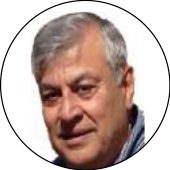
Krishna S. Dhir — IIT Bombay, B.Tech. in Chemical Engineering; Ph.D., University of Colorado. Henry Gund Professor of Management Emeritus at Berry College, former business-school dean, and author of Nonviolence: A South Asian Perspective
Join the conversation
Comments are moderated and may take a little while to appear. Please keep the discussion respectful and on topic.
Comments open soon.